October 2024

CAO Condo Buyers’ Guide
In the market for a condo in Ontario? Our in-depth guide (Condominium Authority of Ontario) will prepare you with all the information you need before putting in an offer. Learn what to ask, what documents to review and the fundamentals of condo ownership.
Downtown church and drop-in centre sued over alleged decade-long violence and drug use
Toronto Today
Aidan Chamandy
Sep 03, 2025
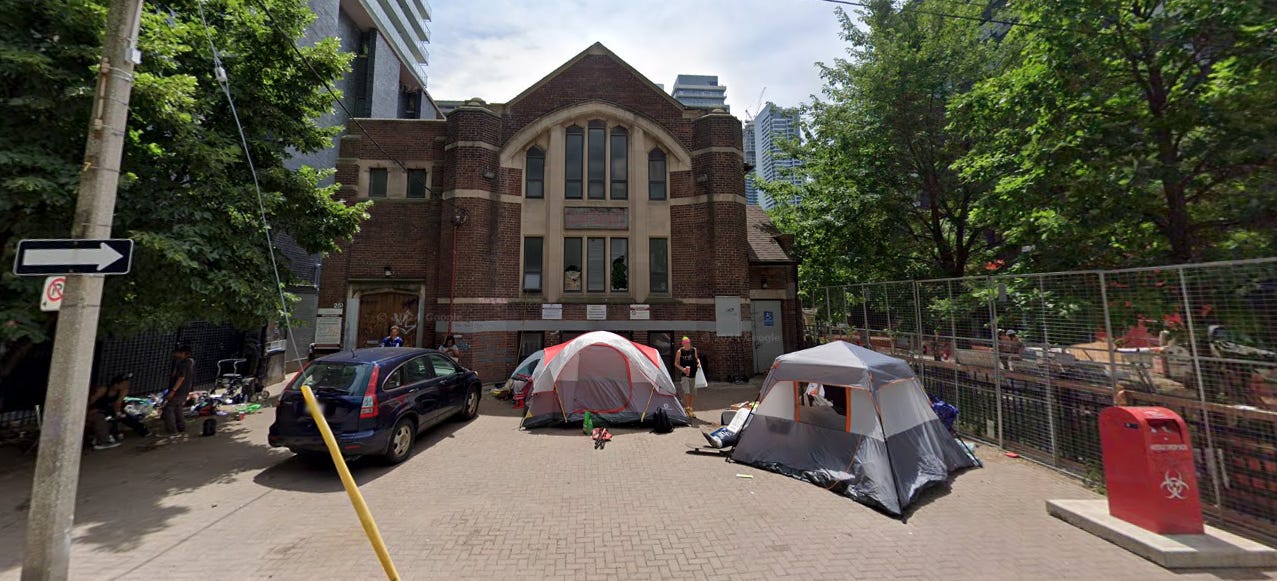
There are the tents and a red used needle box in front of the sanctuary.
A downtown Toronto condominium board has filed a multimillion-dollar lawsuit against a neighbouring church and drop-in centre, alleging that years of unchecked drug activity, violence and disruptive behaviour have created a climate of fear in the community.
The board of CASA Condos, located at 33 Charles St. E., launched the civil action this week against Sanctuary Ministries of Toronto, which operates next door at 25 Charles St. E. as a church and community hub.
In its statement of claim, the condo corporation alleged Sanctuary has allowed its property to become a gathering place for open drug use, dealing, alcohol consumption, harassment and violence.
The claim points to several alleged incidents, including stabbings and property damage, arguing that Sanctuary has created a “free-for-all haven” for illegal activity.
None of the allegations have been tested in court.
The condo board’s claim detailed how the alleged behaviour of Sanctuary’s clients and guests has impacted the lives of residents over the past decade.
Condo residents said they have been yelled at, followed and even chased. In some cases, people have allegedly swung “hammers, steel rods and pipes” at residents, workers and passersby. Others have allegedly broken into the condo’s garage and lobby, stolen bicycles and tampered with fire alarms.
Sanctuary, a federally incorporated charity, describes itself as a church and community hub that welcomes marginalized people.
“Guided by the Gospel, we consider people who are poor and excluded to be the heart and centre of our community,” Sanctuary said on its website. “Together, we strive to offer the love, dignity, stability and resources that all of us need to flourish.”
According to its website, the organization owns the Charles Street church building, which it has operated out of since 1992. It provides meals, counselling, education, health care and street outreach.
George Hislop Park, which borders Sanctuary’s property, is described in the condo board’s filing as a spillover site for drug use, which the board said attracts dealers to the area and leads to discarded paraphernalia. Residents and neighbours alleged they have been forced to change their routines, avoid certain paths, and endure sleepless nights because of shouting and altercations outside their homes.
According to the lawsuit, the incidents have caused “immeasurable turmoil, distress and fear” among residents and led to significant out-of-pocket costs.
Sanctuary did not respond to a request for comment.
In an interview with Spacing magazine last December, Rachel Tulloch, the organization’s pastoral director, acknowledged that Sanctuary has received backlash from Charles Street neighbours for its outreach and community support efforts, which have included allowing tent encampments on the church building’s lawn.
“These tensions are symptoms of a larger systemic problem,” Tulloch told the outlet. “We’re not creating issues—we’re attempting to mitigate them.”
Seeking damages
The condo board said it has spent nearly $370,000 repairing damage to infrastructure such as irrigation systems, access doors and mechanical equipment, as well as extra security measures, including cameras and private patrols.
The suit seeks more than $2.3 million in damages, including $1 million in general damages for nuisance, trespass and negligence, $1 million in punitive damages, $370,000 in damages to recover repairs and security costs, and legal fees.
It also asks the court for a permanent injunction that would prohibit Sanctuary clients from trespassing on condo property. It also wants a judge to require Sanctuary, at its own expense, to maintain its property, prevent drug use and stop violent or disruptive conduct on site.
Sanctuary’s 2023 financial return shows $2 million in revenue, the bulk from donations and about $180,000 from the provincial government.
CASA board president Peter McDonald said Sanctuary is a central issue for residents.
At every annual general meeting, “Sanctuary is the number one subject,” he said. “We’ve tried everything, but we’re at the point where we feel this is the only way that we could get their attention.”
The City of Toronto and Coun. Chris Moise (Toronto Centre), who represents the area, declined to comment as the case is before the courts.
The impact, according to the condo board, extends beyond residents of CASA. At the neighbouring Anndore House hotel, which borders the same park, staff and guests have also raised concerns.
Melissa French, chief operating officer at the Silver Hotel Group, which operates the Anndore, said employees have changed how they move through the neighbourhood.
“A lot of our team members won’t come through the park. They don’t feel safe,” French said. “A number of them have been stopped or had encounters [with Sanctuary clients]. They’ve all had to go through training on how to de-escalate some of these situations.”
While the hotel has not joined the lawsuit, French said the company has participated in community meetings over the years to raise concerns about safety.

For a while, I worked near that condo tower so I can add this note. One day, an afternoon shift concierge went to McDonalds to buy his lunch. On the walk back to work, as he was looking at his mobile phone screen, he was sucker-punched and he dropped onto the concrete sidewalk. He was hospitalized and was off work for three full weeks.
After that, he always wore a security safety vest under his shirt.

Couple facing bankruptcy as Toronto condo market takes a dive
CTV News video
Buying a pre-built condo can be risky.

The $350,000 condo has returned to Toronto’s real estate market
‘It’s like we’re time travelling back to 2019,’ one downtown real estate agent said
Toronto Today
Gabe Oatley
Sep 09, 2025
This year’s drop in prices has led to a slow resurgence of the more affordable downtown unit. So far in 2025, 16 condos have sold for $350,000 or less and an additional dozen downtown properties are on the market right now at that price point or below.
While the majority of the sales are of bachelor apartments, which combine the living room, kitchen and bedroom in a single open area, three one-bedroom units also sold in Toronto’s core this year for $350,000 or less.
“For $400,000, you’re able to find one-bedrooms in good locations with really generous layouts,” he said. “So that’s a price point that a lot of first-time buyers are migrating towards.”
There are currently more than 70 condos on the market for under $400,000 in downtown Toronto, including in Liberty Village, Fort York, West Queen West and the Garden District.

Many B.C. condo owners facing depleted reserves, special levies
Province has amended rules around annual contributions and depreciation reports.
BIV
Jami Makan jmakan@biv.com
22 September 2025
Condo owners in B.C. face the prospect of significant special levies because of the way strata corporations are funded in the province, says a Vancouver software firm.
B.C. has lower average monthly strata fees ($470) than Ontario ($650), but B.C. condo owners are at greater risk of special assessments because of their much lower reserve contributions, according to Vancouver-based OctoAI Technologies Corp.
The average monthly reserve contribution in B.C. is $75 compared to $210 in Ontario, it said. That’s because B.C. requires 10 per cent of operating budgets to be set aside, whereas Ontario links minimum contributions to expected future capital expenditures, said Thomas Beattie, OctoAI’s CEO.
“We [in B.C.] are under contributing materially, and that shortfall is made up in the form of special levies or special assessments,” he said. “In Ontario, they are contributing twice as much every month to their reserve fund than we are.”
Ontario requires condo corporations to contribute an amount “reasonably expected to cover future repairs and replacements” as determined by reserve fund studies, according to Condominium Authority of Ontario.
OctoAI estimates that in B.C., 135,000 condo owners will face a special levy that averages nearly $7,500 per unit this year, said a report on the company’s Eli Report document review platform.
Special assessments aren’t all that special in B.C., Beattie said.
“They should give it a new name, because when we’ve done the math, the average homeowner needs to budget over $2,000 a year, every year for the next decade, towards these fees,” he said, adding that it’s closer to $3,000 for older buildings.
Every strata corporation must have contingency funds to pay for common expenses that usually occur less often than once a year, or which do not usually occur, says the B.C. government’s website. Starting Nov. 1, 2023, strata corporations were required to annually contribute a minimum of 10 per cent of the annual operating fund to the contingency reserve fund.
Operating expenses address recurring maintenance that occurs frequently or annually, such as carpet cleaning or roof maintenance. The strata corporation ownership approves these expenditures as part of the annual budget by majority vote and pays for them via strata fees.
Capital expenditures, on the other hand, are expenses that typically happen less than once a year and are not part of maintenance. An example would be carpet or window replacement. Strata corporation owners generally approve capital expenses at a general meeting separate from the budget approval.
Special levies have historically been the most common way of funding capital improvements, said Sean Ingraham, senior vice-president with property manager FirstService Residential (FSR).
A strata corporation with a failing roof, for example, would typically get a few estimates for replacement, and the strata corporation would then propose that the owners approve a resolution to pay for it by special levy at a general meeting, with each owner to pay their proportionate share.
There are many variables. It could be a mixture of using reserve funds and a special levy, and payments could be spread out over multiple months, Ingraham said.
Depreciation reports mandatory
Depreciation reports play a key role in forecasting, Ingraham said. They provide the condition of all capital assets and components of a strata corporation, and estimate how long each asset will last until it needs replacement. The depreciation report generally includes different funding models that are typically a mixture of reserve funds and special levies, he said.
The strata corporation ownership can then create a plan of how much they are going to need in their contingency reserves versus special levies.
“This gives great insight to potential purchasers and the owners so they can financially plan accordingly,” Ingraham said.
New legislation was passed last year in B.C. aimed at strengthening depreciation reports for strata corporations. Previously, obtaining these reports could be deferred repeatedly as long as three-quarters of a strata corporation’s owners voted annually in favor of deferral, said a July 23, 2024 article by law firm Lawson Lundell LLP.
Updated regulations that took effect July 1, 2024 have now removed the option for deferral. All existing strata corporations with five or more strata lots are now required to obtain depreciation reports on a five-year cycle, the firm said.
New strata corporations established between July 1, 2024 and July 1, 2027 must obtain a depreciation report within two years of their first annual general meeting, and new strata corporations established on or after July 1, 2027 must obtain one within 18 months of their first annual general meeting, the firm said.
“Additional specific content requirements have also been included, in order to help standardize the information which these reports contain,” the firm said.
FSR’s Ingraham said the provincial government’s efforts to improve strata finances may be working. FSR manages more than 72,000 homes in B.C., and more than 95 per cent of them have depreciation reports versus about 60 per cent three years ago, he said. Contingency reserve funds for FSR clients have also increased over the past two years.
“Although not all our clients are thrilled with the increase in contingency reserve fund contributions and cost of creating a depreciation report overall, it is improving the financial health of strata corporations in B.C.,” said Ingraham.
“Long-term, this will reduce the need for many special levies, and aging buildings can be better cared for as funds will be available to address aging strata corporation assets.”

If you own a condo unit, always have access to some liquid assets for the day when you get notice of a special assessment. I lived in a condo tower that had over $2 million in the Reserve Funds. Yet, after reading the last three Reserve Fund Studies, I saw that the condo required over $12 million in major repairs, mostly to the underground garage. I sold my unit.
Since I left, I discovered that the condo board froze the condo fees and spent almost half of the Reserve Fund in putting new wallpaper and carpeting in the hallways and renovating the lobby. It looks great.
Nothing beats putting lipstick on a pig.
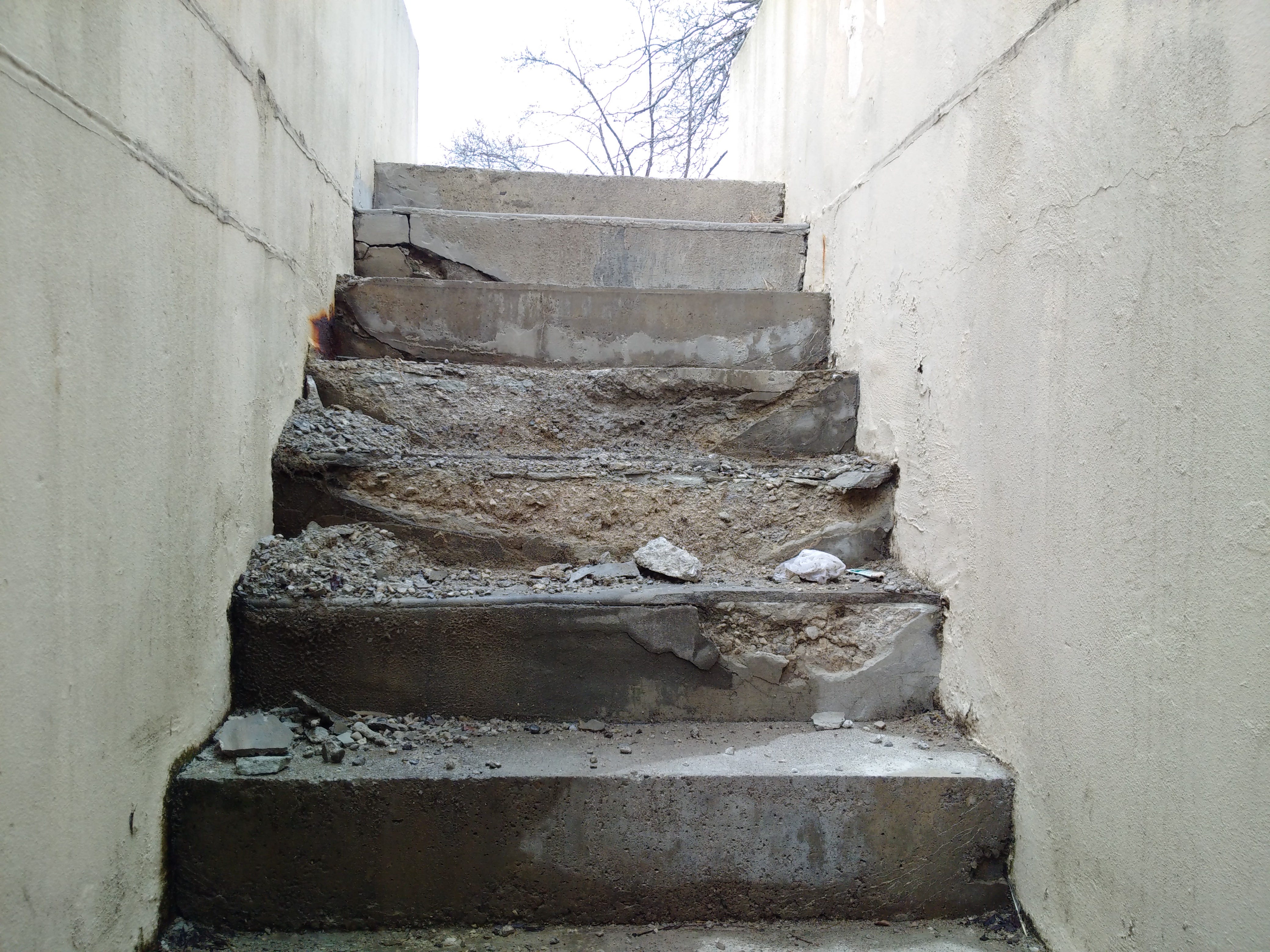
This emergency staircase at a North York condo is a sign that major concrete repairs are required. It won’t be cheap.

From the Boston Globe
The window is closing for Windows 10 users About 45% of Windows users worldwide are still on Windows 10.
If your condo corporation is still using Windows 10, spring for an upgrade.
It is time for condo boards to ensure that their property managers have a separate hard drive, kept in a separate location, to regularly back up all the corporation’s data. This should be done at a minimum once a month. Once a week would be better.

Fire sprinklers
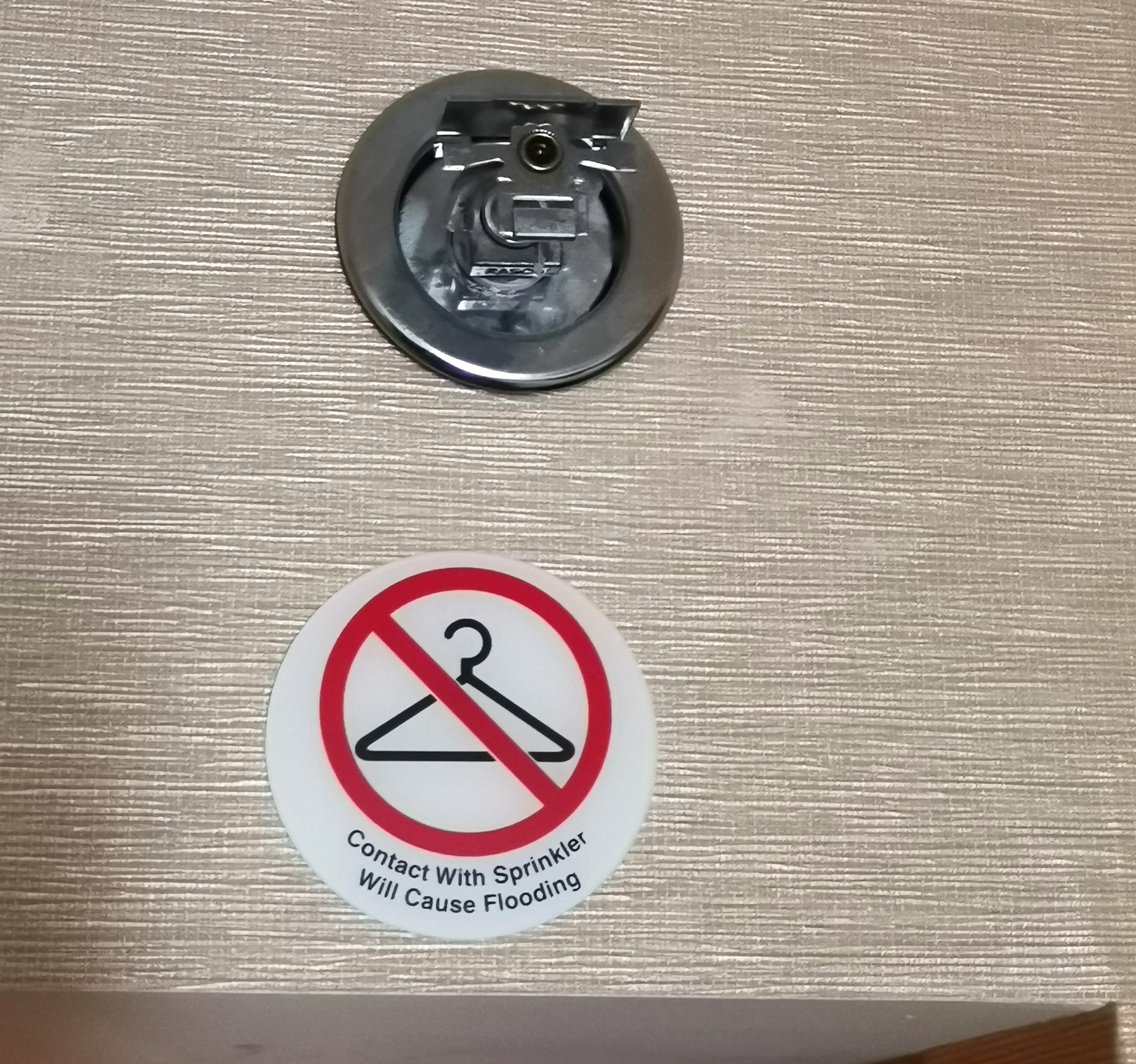
If your condo has fire sprinklers in the units, be sure to inform all the owners and renters that they should never be used as coat hangers. Yes, this happens.
I worked in a factory where on two separate occasions, we had a fire sprinkler activated. Why, we could not determine.
The amount of filthy and rusty water that comes pouring out of a sprinkler head will surprise you. I certainly hope that your manager and superintendent knows the location of the main shutoff valves when the fire fighters show up.
Going to U of T
I once worked at a very high-end condo in the Yorkville district. In early November, a afternoon shift valet started telling the residents that he signed up to take biology at the University of Toronto starting in January.
That surprised me because I was sure that this fellow was a high-school drop-out. What the hell was this all about? Then I got it.
The residents always give Christmas gratuities to the condo’s employees in individual envelopes. This conniver figured that the residents would give a university student bigger gratuities.
Sure enough, come January, there was no more talk about going to U of T.